Claudia Hill Show
TimeSpace Installation and Fashion Show
New York, New York
222
Phaidon Press, 2002
ISBN 978-0714841724
Claudia Hill Show
TimeSpace Installation and Fashion Show
New York, New York
222
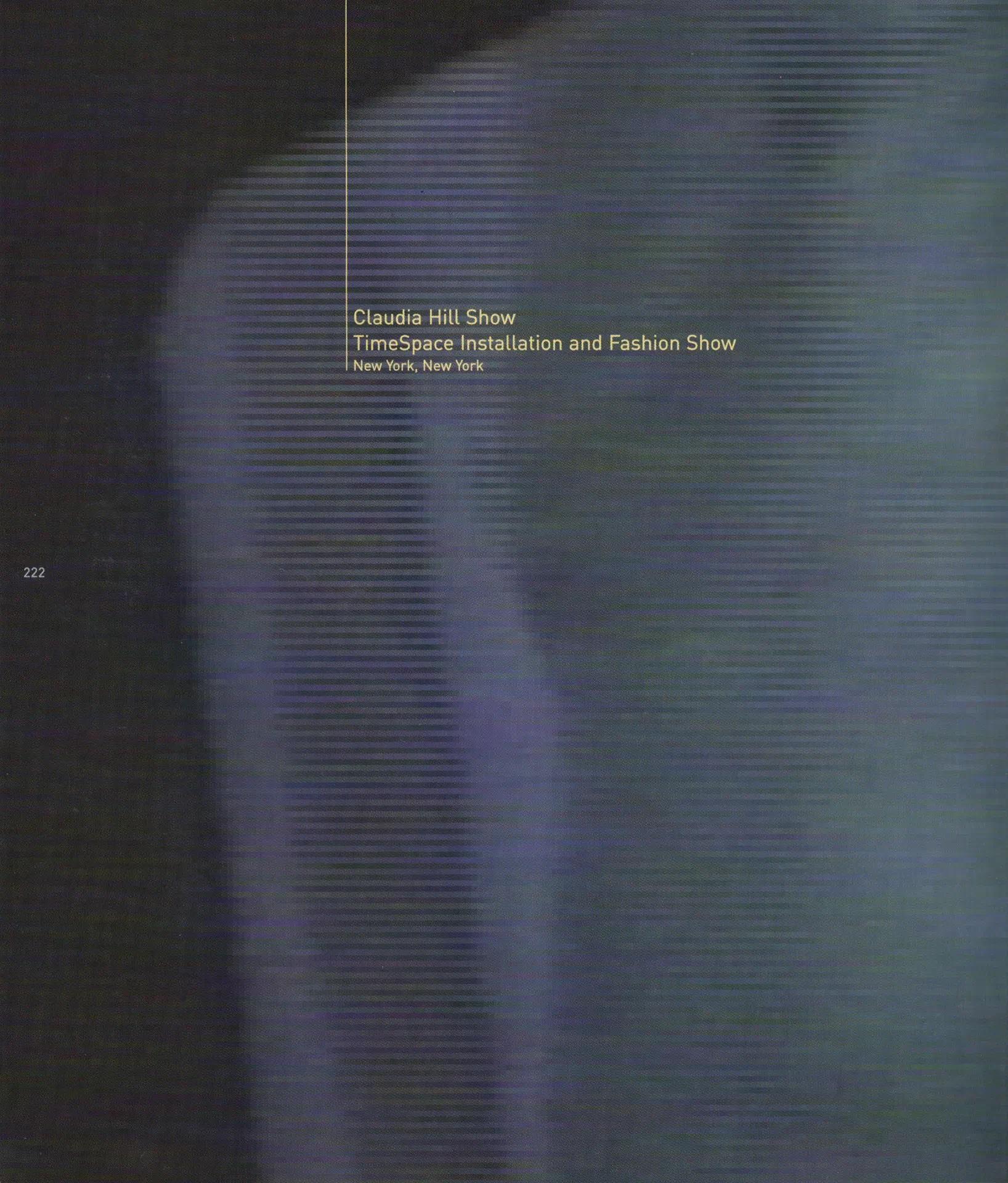
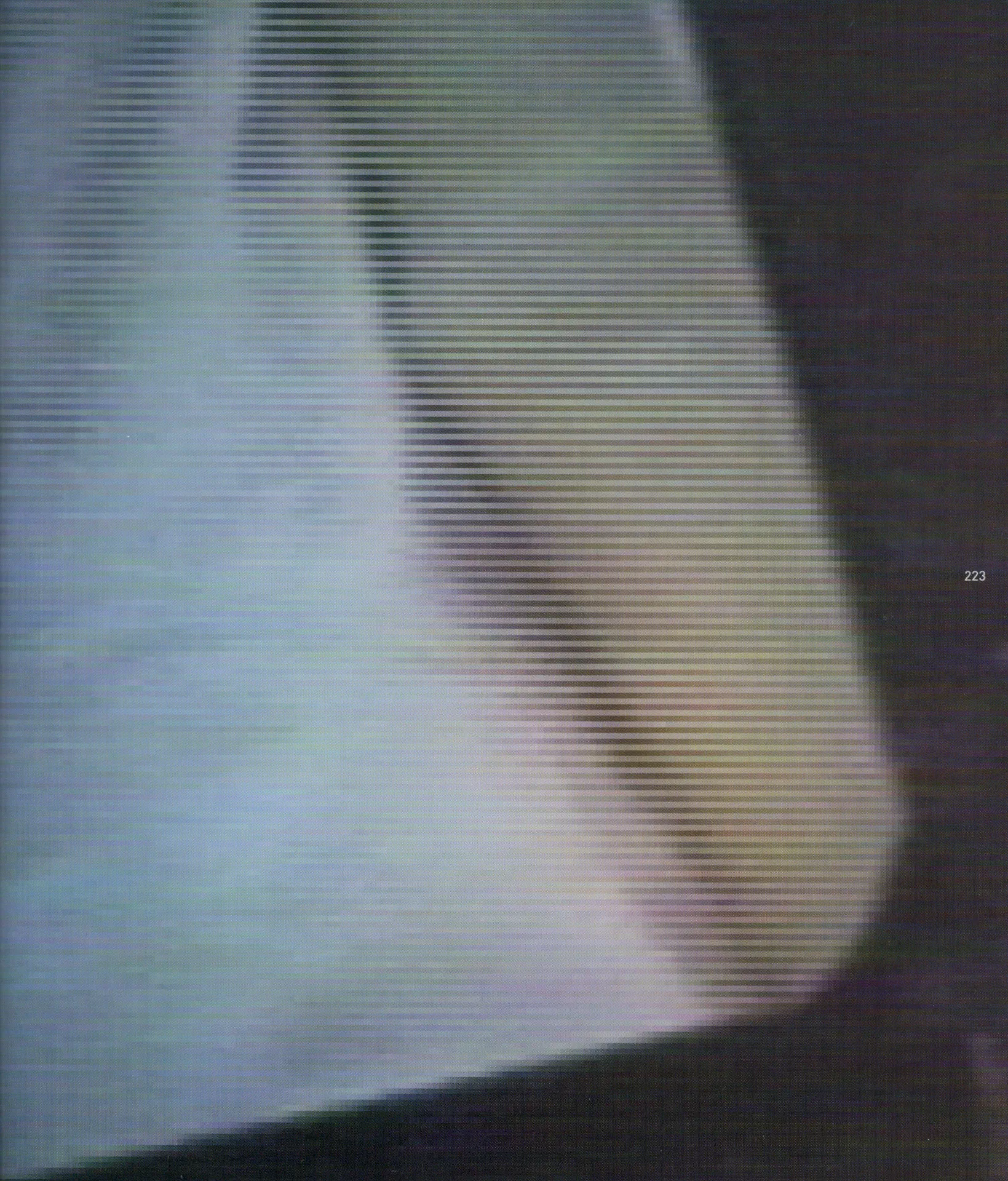
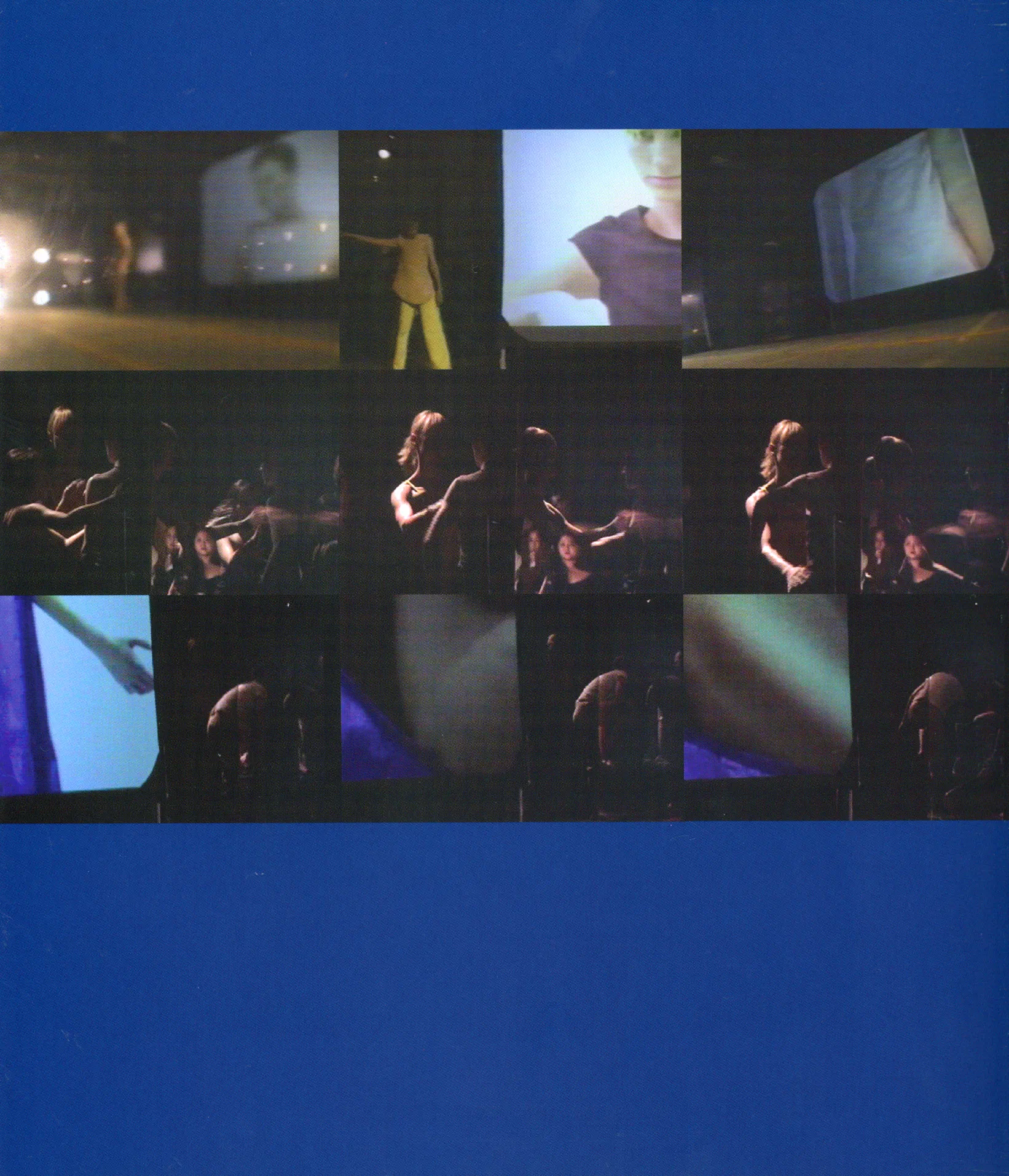
A page from Asymptote: Flux, a monograph on the architecture studio Asymptote, from its section documenting the TimeSpace Installation and Fashion Show it built for Claudia Hill in New York. This page carries a single full-page, motion-blurred photograph from the event, with no caption identifying its subject.
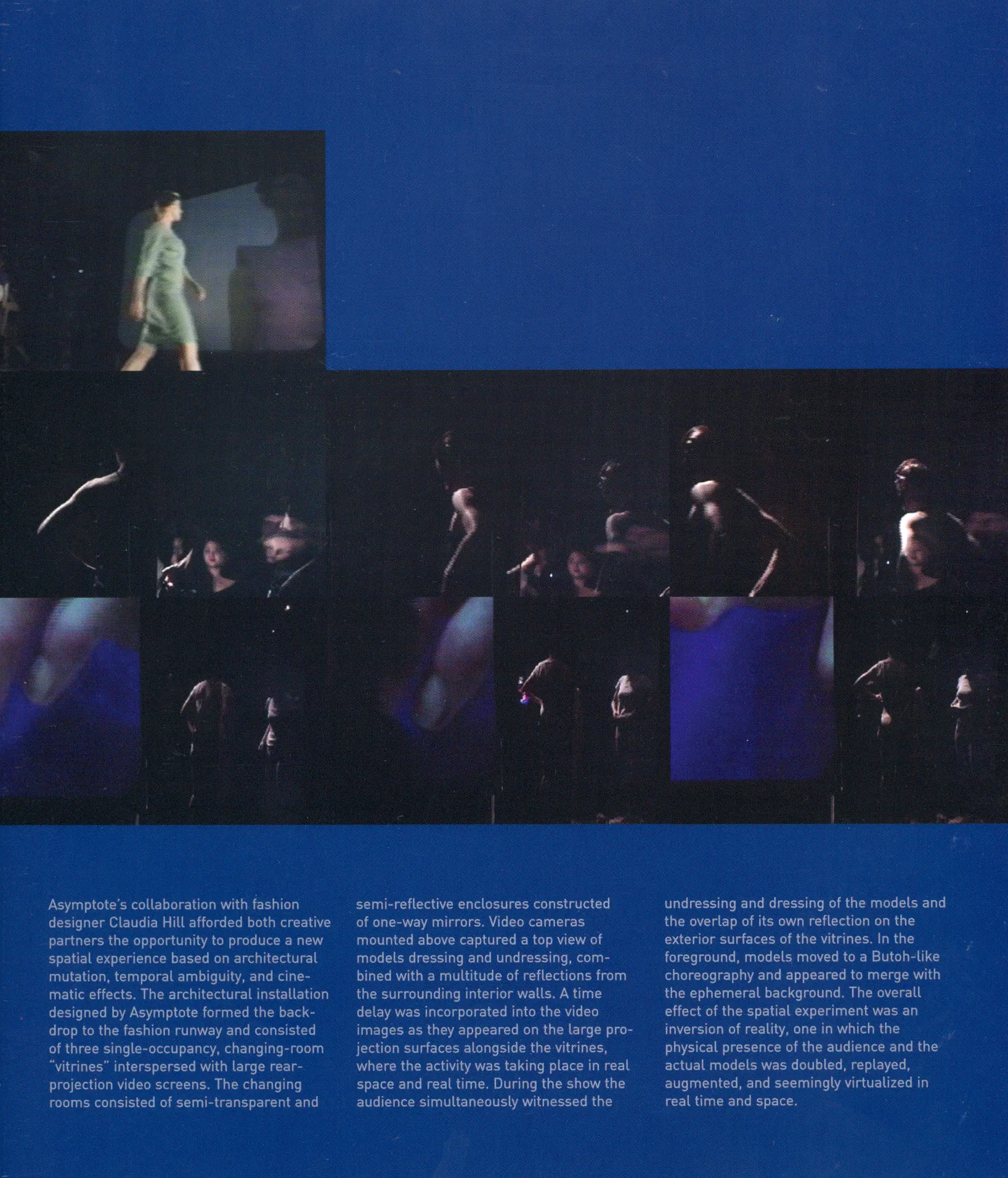
Another page from the same documentation of the Claudia Hill TimeSpace installation. It carries a grid of dim video stills from the show, which the accompanying text describes as time-delayed projections of models dressing and undressing inside mirrored vitrines, shown alongside live, Butoh-influenced choreography on the runway.
Asymptote’s collaboration with fashion designer Claudia Hill afforded both creative partners the opportunity to produce a new spatial experience based on architectural mutation, temporal ambiguity, and cinematic effects. The architectural installation designed by Asymptote formed the backdrop to the fashion runway and consisted of three single-occupancy, changing-room “vitrines” interspersed with large rear-projection video screens. The changing rooms consisted of semi-transparent and semi-reflective enclosures constructed of one-way mirrors. Video cameras mounted above captured a top view of models dressing and undressing, combined with a multitude of reflections from the surrounding interior walls. A time delay was incorporated into the video images as they appeared on the large projection surfaces alongside the vitrines, where the activity was taking place in real space and real time. During the show the audience simultaneously witnessed the undressing and dressing of the models and the overlap of its own reflection on the exterior surfaces of the vitrines. In the foreground, models moved to a Butoh-like choreography and appeared to merge with the ephemeral background. The overall effect of the spatial experiment was an inversion of reality, one in which the physical presence of the audience and the actual models was doubled, replayed, augmented, and seemingly virtualized in real time and space.